

What is the O-1 Visa?
NB:
The O-1 category is divided into two sub-categories:
- O-1A visa – for professionals in business, science, education and athletics
- O-1B visa – for individuals in the arts and the film or television industry
The O-1 category visas are typically issued for for a period of 3 to 5 years (depending on the country of nationality, that’s set by consular regulations) with the option of renewal. They also make you 2 steps closer to the Green Card under the EB-1A category, as far as talent criteria are pretty the similar. So, that makes O-1 popular strategy for working in the U.S. and eventually transitioning to permanent residency. Just make sure the U.S. is the right fit for you – and then apply for an immigrant visa.
It’s also good to know from the beginning that obtaining the O-1A / O-1B visa is a two-step process.
The first step is submitting the O-1A / O-1B visa petition by completing the I-129 form.
Once your petition is approved, the second step is to finalize your visa application using the approved I-129.
There is a common confusion on O-1 category visas. People often search for:
O1, O1A, O1B, OA1, OB1
But actually there are just 2 types of correct visa abbreviations:
- O-1A
- O-1B
Read and memorize the correct abbreviation
| Symbol | Definition |
|---|---|
| O | is often colloquially referred to as 'Outstanding', reflecting the visa's focus on special talents |
| 1 | indicates a sub-category within the O visa category for principal applicants |
| A / B | indicate the scope of Outstanding: |
- A – for science, business, education and sport
- B – for the arts, including film and television
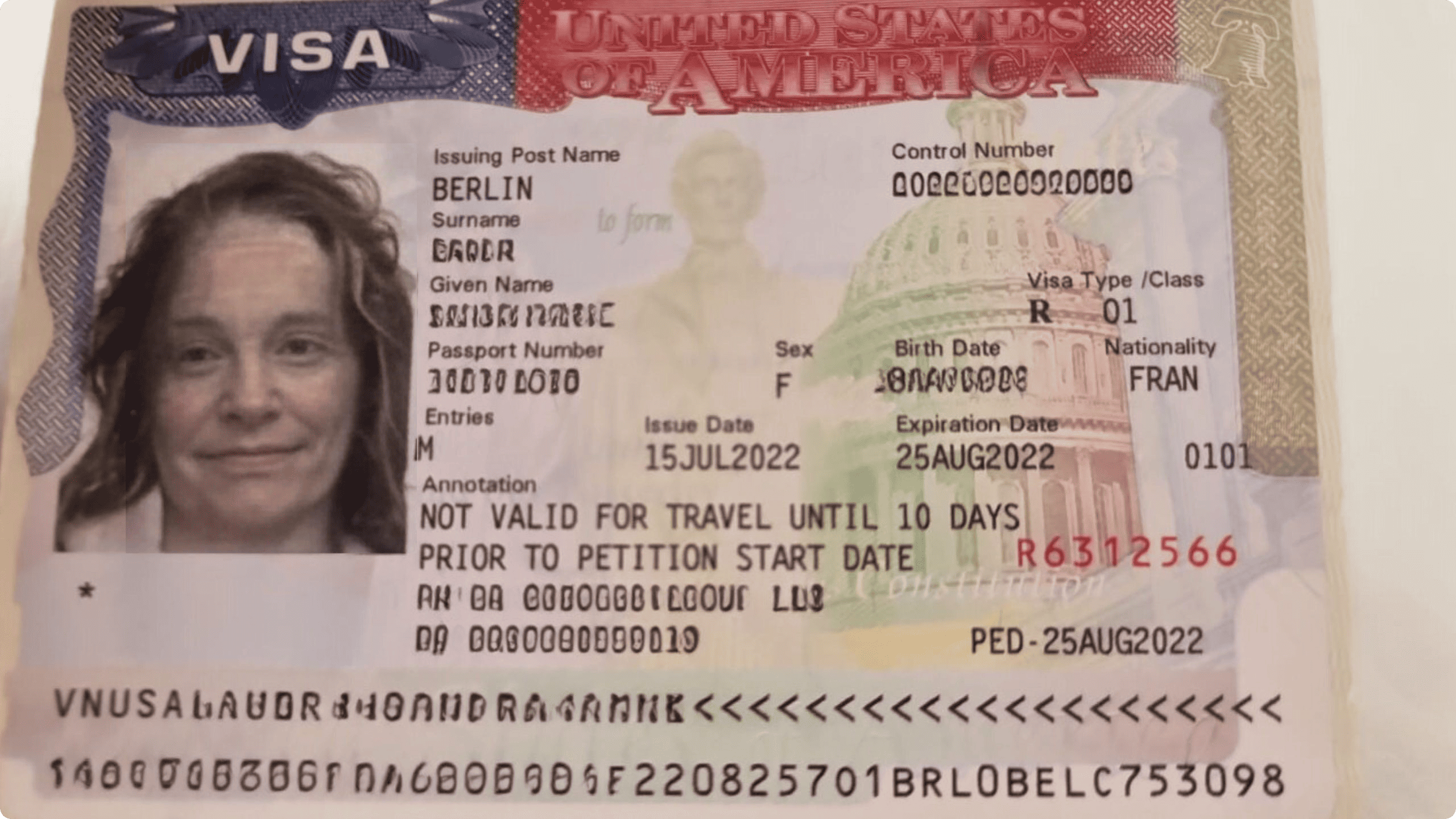
Before we dive deeper, let’s take a moment to go over some key terms related to O-1 visas. This glossary will help you grasp the essential concepts you’ll need to understand as you go through this topic.
- This is the official request submitted to USCIS to show that you meet the criteria for O-1 visa. Think of it as your case neatly packaged in a legal format.
- This refers to the U.S. entity or individual — either an employer or an agent — that files your O-1 visa petition with USCIS. Sometimes called “a sponsor”.
- This is a U.S. company that provides you with a job and sponsors your O-1 visa petition.
- An agent acts as a liaison between you and U.S. companies, allowing you to work for multiple employers. They also serve as the petitioner by filing the petition on your behalf.
- This refers to you — the individual seeking the O-1 visa. While the petitioner submits the visa petition, you are the one who will ultimately receive the visa if it is approved.
- This is the U.S. Government agency responsible for reviewing petitions, verifying evidence, and making decisions on immigration benefits, including O-1 visas.
Popular O-1 Visa related questions
- Can I work in the U.S. with my visa?
Absolutely! If you hold O-1 visa, you can work in the U.S., but only for the employer listed on your approved petition (Form I-129). If you’re switching employers, your new company must file a fresh petition on your behalf.
- Are there quotas for this visa?
Good news! the O-1 visa doesn’t have any quotas. This means, it’s available for qualified applicants year-round, whenever you’re ready to apply.
- Do you need to go through the lottery to get O-1 Visa?
Nope! Unlike the H-1B visa, the O-1 visa doesn’t go through a lottery system. So, you can apply anytime without worrying about random selection.
- Can multiple visas be processed at the same time?
You can’t apply for more than one O-1 visa at a time.
- Can I extend my visa beyond the standard visa validity period?
Yes, you can! The standard validity for O-1 visa is 3-5 years depending on the case.
Previously you could extend it for up to one year at a time, as long as you’re still working on the project or performing the duties for which the visa was issued.
But – good news: from Jan 2025 it got even better, now you can extend your visa in 3-year increments, as long as you continue to meet the criteria. There’s no limit to the number of extensions, you just need to go through the process every time.
O-1 visa obligations
As a work visa category, the O-1 has its obligations. Once the visa is issued to the applicant, there are obligations for both the employer and the employee. We provide a brief overview of them below
Obligations of the employer
- Offer and pay competitive salary throughout the term of employment.
The employee must be hired and continue to work in the same position claimed in the petition. That is, he or she must maintain the field of expertise claimed in the petition
- Keep USCIS updated on any changes to employment terms.
It’s crucial for employer to inform USCIS of any changes in the employments terms and conditions — like if a project wraps up or if an employee is terminated. This is important for immigration compliance.
- Offer and pay competitive salary throughout the term of employment.
The information is relevant for the case when Employer = Petitioner
Obligations of the O-1 visa holder (employee)
- Work exclusively for the employer named in the petition.
If the petitioner wishes to change employers, a new petition must be filed.
- Comply with all conditions of the visa status.
This includes complying with the duration of the visa, activity restrictions (e.g. working only on an approved project) and other conditions specified in the petition. - Renew the visa if work on the project continues or a new project is started.
The O-1 visa is issued for up to 5 years, but may be renewed for up to one year at a time if work on the project continues. A new petition (Form I-129) must be filed to justify the need for an extension.
- Work exclusively for the employer named in the petition.
NB:
- Changing Employers:
If you’re an O-1 visa holder and want to switch employers, the new employer will need to file a Form I-129 petition on your behalf. Keep in mind, you can’t start working for the new employer until the petition is approved. Keep in mind, that the process works like this if your petitioner is your employer. If your petitioner is an agent, it works different. We will disclose it below.
- Termination of Employment: If your employment ends before your visa expires, the petitioner should notify USCIS. You, as O-1A / O-1B visa holder then have 2 options: either the new employer files a new petition for you, or you change status to another visa. Do not delay your decision: you will have only 60 days of the grace period to choose and implement one of the scenarios, or you will have to leave the United States.
- Family: Family members of O-1 visa holders — specifically, spouses and children under 21 — may qualify for an O-3 visa. However, it’s important to note that they won’t be eligible to work in the United States.
Major restrictions on the O-1 visa holder
➖ Petitioner Dependency
The O-1 visa is linked to your petitioner, who is typically your employer, but not necessarily so. If you want to change employers or work on multiple projects, separate petitions will need to be filed for each situation.
➖ Limitation on the type of work
The job should align with the speciality and field where the applicant demonstrated outstanding ability. Performing duties that are not appropriate for the visa category could result in a breach of visa status.
➖ Need for extension
Once the initial period of up to three years is over, you’ll need to extend the visa if the project is still going. Extensions are only granted for 1-3 year periods, which can add to the administrative hassle.
Main O-1 benefits

- Cost and Time
- When you compare it to other non-immigrant visas, the O-1 is relatively affordable. It usually takes less time to obtain an O-1A visa than most other non-immigrant work visas or even a Green Card.

- Path to green card
- Getting an O-1 visa puts you 2 steps closer to the application for an EB-1A Green Card, since the criteria are quite similar.

- Versatility of Petitioner
- Many visas requiring a sponsor specify that it has to be an employer. However, O-1 visa applicants, who are often contracted rather than hired as full-time employees, can be sponsored by either an employer or a U.S. agent.

- Bring Your Family
- Bring Your Family
You can bring your spouse and unmarried children under 21 with you. They’ll be able to live and study in the U.S. legally.

- No degree or language requirements
- You don’t need a college degree, as academic qualifications aren’t a factor — unless you have a PhD, which can definitely strengthen your case. Plus, there’s no English language requirement.

- Unlimited validity period
- This is where the O-1 visa really shines. While most other visas come with limited durations, the O-1 offers an initial stay of 3-5 years, along with the option for unlimited 1-3 year extensions.
ADDITIONAL "O" VISA CATOGORIES
Companions (O-2 visa)
Who are the Companions?
The O-2 visa can be obtained by persons who accompany the O-1 visa holder and provide necessary support in professional activities.
A companion can only be a specialist, without whom the applicant’s activity is impossible. For example, outstanding athletes bring their personal massage therapist or a doctor as a companion.
What are the requirements for applicants?
- The applicant should be able to demonstrate the necessity of their participation in the O-1 visa holder’s project. They also need to provide evidence that their services cannot be substituted by local resources in the U.S.
How long a visa is issued for?
- The validity of the O-2 visa is linked to the validity of the O-1 visa and can be extended in synch with it.
Family (O-3 Visa)
- The spouse and minor children (under 21) of an O-1 visa holder are eligible to apply for an O-3 visa.
What are the requirements for applicants?
- Proof of relationship to the O-1 visa holder, such as a marriage certificate or birth certificate.
How long a visa is issued for?
The O-3 visa is issued for the same duration as the O-1 visa and is renewed alongside it.
Be informed: O-3 visa holders are not allowed to work in the U.S., but they may attend educational institutions.
Statistics
Are you considering applying for O-1A visa? To give you a better understanding of the process, let’s dive into the numbers.
Our O-1A visa database provides a comprehensive breakdown of the key statistics for 2023, including the number of petitions filed, approvals, RFEs, and denials.

When thinking about applying for O-1 category visa, everyone would like to understand their chances of success. The good news is that with the right guidance, you can really improve your chances of getting approved. At Dreem, we’re committed to helping you achieve your career goals.
Our team of 10 U.S. licensed attorneys has a proven track record of success, and we have 5-Star reviews only as of now.
We leverage our expertise in IT and tech cases to provide personalized support and maximize your chances of approval. By combining our resources with your case, we can help you manage the complex O-1A visa process and achieve your dreams.
NB:
- USCIS might issue a Request for Evidence (RFE) if the submitted evidence is insufficient. This is a standard procedure, allowing applicants to provide additional information
- You may also receive a Notice of Intent to Deny (NOID) from USCIS, which is a formal notice indicating officer intent to deny an application due to perceived deficiencies or ineligibility. This provides an opportunity to respond and address the concerns
Who is a Petitioner for O-1 Visa?
To really grasp the topic, let’s start by getting familiar with the terms.
- In the context of visa applications, a petition is a formal request stated on a completed I-129 form. submitted to the U.S. Citizenship and Immigration Services (USCIS).
- The petitioner is typically an individual or organization seeking to sponsor a foreign national’s visa application.
For the O-1 visa, the candidate couldn’t act as their own petitioner; a sponsor is needed to file the petition with USCIS on behalf of the candidate.
Another aspect of the O-1 visa is that it doesn’t have to be an employer who serves as the sponsor. While many candidates are indeed sponsored by their employers, other arrangements are possible. Individuals (agent) such as:
- U.S. citizen
- Permanent residents
- Even foreign employers through U.S. resident agents
– could also act as a petitioner.
This is particularly relevant for candidates who don’t have a single employer, like independent contractors or those with a series of events lined up.
First and foremost, the petitioner is legally recognized in the United States.
- The company should be incorporated in the U.S.
- The individual petitioner should be a permanent resident of the U.S.
- The legal entity of the petitioner needs to have a U.S. address, a tax ID number, and comply with U.S. laws. As a result, foreign employers couldn’t file O-1 visa petition directly.
There are three main scenarios for the petitioner of the O-1 visa:
- An employer-petitioner is a single entity that submits a petition on behalf of the applicant. In this scenario, the beneficiary is required to work exclusively for that specific employer for the duration of the O-1 visa’s validity.
- An offer is required to apply for O-1 visa. In some cases, it may be relevant to set up a company that can petition on your behalf and establish a formal employer-employee relationship. In this scenario, your own company acts as the petitioner.
- An agent is an intermediary between you and an employer in the U.S.
It is the agent who finds employers in the U.S. for you and allows you to work with several employers listed on the petition.In rare cases, the agent may be both the petitioner and the employer.
NB:
- An agent could be a U.S. company, a U.S. citizen, or a Green Card holder (with a minimum validity of six months)
- As an agent-petitioner, this individual allows you to work with multiple employers during your O-1 visa validity period, offering more flexibility and the opportunity to take on additional projects throughout your visa term
- The agent could be either an individual or an organization authorized by the employer to act on its behalf. Contracts between the agent and the employer should be submitted, along with the job offer for the O-1 category visa applicant
What are the Requirements for an O1 Visa?
To be eligible for O-1A / O-1B visa, you’ll need to meet specific requirements and provide strong evidence of your exceptional abilities in business, science, arts, education, or athletics, showcasing your national or international recognition. You should also be among the top performers in your field. First, we will give a brief Memo on Requirements for the O-1 visa category, and then we will elaborate on each item.
The Requirements for O-1A / O-1B
- The Petitioner
- Job Offer
- Form I-129, completed by petitioner
- Extraordinary Ability Criteria (3 out of 8), evidenced in the petition
- Advisory Opinion Letter (AOL)
Intention to pursue a career in the U.S. Evidence includes invitations to work, contracts, cooperation agreements.
Your field of expertise plays a crucial role. This is where you’ll highlight your achievements, successes, and notable experiences in your professional biography. Although it might seem straightforward, many applicants struggle to define their specific field accurately.
Finding the right balance is key: a field that’s too broad might not make you stand out, while a field that’s too narrow might overlook significant accomplishments.

EXAMPLE
- If you’re an academic researcher with a PhD in environmental science and have published extensively on climate change modelling, you could highlight this as your main area of expertise within Sciences, showcasing your specialist knowledge and contributions to environmental research.
- As a financial analyst with expertise in financial data analysis and risk management, defining your field more specifically within Business can help differentiate your skills from those of general business professionals, highlighting your ability to interpret complex financial data and mitigate risk.
It’s worth noting that you don’t need to meet all 8 criteria for the O-1A visa. USCIS expects applicants to meet at least three. While professionals in any field could potentially meet all the criteria, doing so in practice requires significant effort, recognition, and achievements.
If you fail to meet at least three criteria, your petition will be denied. However, a rejection doesn’t prevent resubmission after addressing the deficiencies.
There’s no minimum time limit for resubmission, but it’s recommended to address all the comments to increase the chances of success.
How do you read the talent criteria?
Below is a comprehensive breakdown of the key Talent Criteria, complete with detailed interpretations. Most criteria are structured in a similar way:
— We start with an Overview of the criterion
— Next, we outline the components necessary for understanding and demonstrating the criterion
— We then highlight additional aspects to consider
— Finally, we provide examples, including both positive and negative scenarios, to illustrate how to meet the criterion
In addition, the criteria for O-1A and O-1B have been placed in different sections.
Choose the category you prefer and then click on the green bars to uncover more information about each criterion.
O-1A visa is for science, business, education and sport
O-1B visa is for the arts, including film and television
LEADING ROLE IN ORGANIZATION

What is the “Leading Role in Distinguished Organizations” Criterion for O-1A visa?
To meet this criterion, you’ll need to show how you’ve played a key role and made significant contributions in organizations with strong reputations.
As you look back on your career, think about the leadership roles you’ve held. Have you led teams, overseen projects, directed operations, or helped improve your organization’s performance?
Get ready to highlight your accomplishments! This is a key factor for business cases and really forms their backbone. If you can’t show that you’re vital to the organization, it might be tough to prove your success as a professional in the eyes of the U.S. under the O-1A category.
Two key ingredients to prove the criterion
-
1
Proving the leading or critical role
-
- When a role is described as "leading," the evidence should clearly demonstrate that you hold a leadership position, often supported by a title that aligns with your responsibilities.
A leading role typically involves holding a high-ranking position within the organization, such as a C-level role (CEO, COO, CMO, CFO, CIO) or at least a VP-level position.
- For roles considered "critical", the evidence should show that your contributions significantly impact the organization's success. Even if you're not in a leadership position, you can still be considered "critical" if your work is crucial to achieving major outcomes. Your contributions should be vital to the organization or division as a whole, influencing its overall reputation or standing, rather than being limited to specific projects.
- When a role is described as "leading," the evidence should clearly demonstrate that you hold a leadership position, often supported by a title that aligns with your responsibilities.
A leading role typically involves holding a high-ranking position within the organization, such as a C-level role (CEO, COO, CMO, CFO, CIO) or at least a VP-level position.
-
-
2
Evidence of organization's distinguished reputation
When we mention organizations with a strong reputation, it's tough not to think of major names like Google, Amazon, Microsoft, Facebook, Disney, Tesla, Apple, Samsung, Shell, Walmart, and Coca-Cola. These names alone evoke a sense of prestige. However, even for such renowned companies, it's wise to support their reputation with solid evidence. The USCIS doesn't focus solely on the big players. Even emerging startups can be considered distinguished. Learn more about it below.
- NB
- Being part of a well-known company could be beneficial, but it also presents unique challenges. Take Amazon, for example. While it's easy to demonstrate the company's outstanding reputation, it could be difficult to stand out in such a massive organization. One way to address this is by honing in on your specific branch or department. Rather than saying you're just one of many Marketing Managers at Amazon, you could describe yourself as a key Marketing Manager for Amazon Belgium or at Amazon Prime Video Subscription team.
Key considerations


Timing is important. If you held a critical role 10 years ago, it might not be relevant to your case today. Officers may question whether you’re still performing at that level.
Similarly, if you’ve only been in a C-level role for six months, it’s unlikely you’ve had enough time to make a sufficient impact on the organization.
Types of Evidence for the criterion, or How to Prove
- Positions or experiences that could qualify as leading or critical roles
- C-levels and Directors
- Vice Presidents
- Senior-Level Employees
- Creative Directors
- Lead Software Architects or Engineers
- Directors of Operations
- Heads of Departments
- Financial Directors
- Head Athletics Coaches
BUT… This list isn’t final. You don’t need to hold a C-level position to qualify for a critical role. Your position might also fit the criteria.
- How to prove distinguished reputation?
There are plenty of ways to prove your reputation. Dozens of specific proofs can be categorized into main groups of factors:
- Media Mentions
- Company History
- Leadership and Impact on the Industry
- Research and Scientific Activity
- International Presence and Global Reach
- Scale of Operations
- Partners and Clients: Big Names and Logos
- ESG
- Innovation
- Government recognition
👇 How to prove?
- Evidence of the position:
- Employment agreement/contract
- Additional suitable corporate documents
- Evidence about achievements, projects, or any type of recognition related to the role:
- Contracts with major clients and partners led by you, feedback from clients
- Media mentions that demonstrate the critical role
- Samples of your work, Internal presentations, reports and documents on the projects developed
- Recognition of your work: any promotions, medals, or awards received, or clients’ testimonials
- Letters of recommendation
- Photos (Photographs can provide visual evidence of your participation in significant events, projects, or activities related to your role. They can complement other forms of documentation).
- QUICK TIP on letters of recommendations
The letters should include the following if possible:
- Name of signatory
- Explanation of their role in the organization
- Explanation of why the applicant is in a leading or critical role
- Company Letterhead
- Statement detailing the value of significant projects you have completed. Include specifics such as the date, location, procedures involved, and your role within the project. Highlight how your contributions benefited the organization overall.
Examples of “Leading Role in Distinguished Organizations” criterion: positive and negative case scenarios

- Positive scenario
- The founder of a startup also performs the role of CEO: hires key employees, directs the strategy, and makes key decisions.
The company’s organizational structure, key founding documents and letters of recommendation from advisors and investors all help to prove this leadership role.
At the same time, the startup has already built a distinguished reputation, as evidenced by media mentions, Big Names of partners.
- The founder of a startup also performs the role of CEO: hires key employees, directs the strategy, and makes key decisions.

- Negative scenario
- A startup founder comes up with a breakthrough idea, but that’s the end of his involvement in the life of the company. He is not in a leadership role because he is not in a C-level or other position and is not involved in the life of the company.
It’s also difficult to present the company as a startup with a good reputation: he’s working in stealth mode, showing no traction and focusing on development, and has yet to make an impact on the industry.
- A startup founder comes up with a breakthrough idea, but that’s the end of his involvement in the life of the company. He is not in a leadership role because he is not in a C-level or other position and is not involved in the life of the company.
HIGH SALARY OR REMUNERATION
What is the "High Remuneration" Criterion for the O-1A Visa?
Simply put, immigration officers need convincing evidence for your O-1A visa application that shows your earnings in your area of expertise are significantly above those of your peers in the same field, position and region. This criterion is met by individuals whose salaries are notably higher than the industry average. While USCIS regulations don’t define a specific amount or percentage for what constitutes a “high salary,” generally, higher earnings are seen more favorably. Attorneys on the Dreem platform suggest that being in the 90th percentile for salary or compensation is an effective way to meet this criterion.
So, ideally, your income should be in the top 10% of professionals in the same role, within the same industry and paying taxes in the same region and time frame. By meeting these conditions, you could meet the criterion for the O-1A visa.
Two key “ingredients” to prove you meet the criterion
-
1
Prove the fact you receive high remuneration
The first step in proving eligibility for the O-1A visa is establishing your remuneration. At this stage, you'll need to present a specific salary amount, which will then be compared to other relevant figures in the next step. How to understand the Types of Remuneration?
- Salary: This refers to the regular gross base salary (either monthly or annually) paid by an employer to an employee
- Earnings: This includes all forms of compensation, such as bonuses, commissions and equity, highlighting financial success beyond just the base salary for the O-1A visa
- Future Earnings: A credible contract or job offer that specifies future salary or compensation can demonstrate your ability to command such earnings
- NB
- The further your income type deviates from a gross salary, the more challenging it becomes to position and substantiate this figure for the O-1A visa remuneration requirement.
- Documents to prove earning
- Annual Tax Returns: to demonstrate your income over a specific period
- Monthly Salary Slips: to provide a detailed breakdown of your earnings
- Support Letter from Your Accountant: to validate your income and provide an expert opinion
Contract, job offer letter, or other evidence of prospective salary or remuneration for services
-
2
Prove it is high in comparison to others
Show that your current salary is in the top 10% for your profession and area of expertise. It's important to make accurate comparisons: begin by identifying your industry and job title, then measure your earnings against others in similar roles, using trustworthy data to support your claim.
- Sources to compare your remuneration to others in your field
-
When you're looking to substantiate your salary claims, it's beneficial to check off as many boxes as possible. However, remember that the quality of sources can vary:
- 1st grade of quality Official sources, such as the Bureau of Labor Statistics or your country’s official data, are the most reliable
- 2nd grade of quality Verified Industry Salary Reports (e.g., Payscale, Glassdoor, or industry-specific reports)
- 3rd grade of quality Trustworthy relevant websites salary data (Payscale, Glassdoor, etc)
Ways to prove your remuneration is higher than the others
The most effective way to show that your salary is in the top 10% is by using official data, reliable public industry reports, or a custom report from a well-regarded recruitment agency.
If those options aren’t available, consider these alternatives:
Show that your remuneration is higher than the upper limit of the range of publicly available data on relevant salary data websites like Salary.com.
Case example: upper limit of CMO Salaries in Birmingham, UK is £35K/yr. Showing you make more – puts you in good position for high remuneration criterion.

Or at least…
Show it’s higher than median and average by at least 20%-30%.
For example, average CMO salary in Birmingham, UK is £30K/yr. Show you make 20-30% more.

Easy Navigation: Documents to prove the criterion aspects
- Documents to prove earning
- Annual Tax Returns: to demonstrate your income over a specific period
- Monthly Salary Slips: to provide a detailed breakdown of your earnings
- Support Letter from Your Accountant: to validate your income and provide an expert opinion
- Contract, job offer letter, or other evidence of prospective salary or remuneration for services
- Documents to prove
you are among TOP 10% in your field - Salary comparison trustful websites like Salary.com, Payscale.com, or Glassdoor.com to collect further valuable statistics
- Comparative Wage Data
- Local Wage Data
- Industrial reports in your field of expertise
- Research data from recruitment platforms and analyst firms
Key considerations
These often-overlooked factors can make a significant impact:


Try to make at least three different comparisons using the data from the ‘Types of Evidence’ section. This comprehensive approach strengthens your case for high remuneration


Include a comparison table in your petition letter to clearly present your earnings against industry averages


Examples of High Remuneration criterion for O-1A visa: positive and negative case scenarios
- Positive scenario
- A Graphic Designer from Bangladesh proves the high salary criterion. He has provided all the necessary evidence and compares his remuneration with other Graphic Designers from Bangladesh in similar positions.
He also compares his salary with professionals with the same experience: 3 to 5 years. By showing that he earns more than the upper limit from public data, he has a good chance of meeting the criterion.
- A Graphic Designer from Bangladesh proves the high salary criterion. He has provided all the necessary evidence and compares his remuneration with other Graphic Designers from Bangladesh in similar positions.
- Negative scenario
- The Marketing Manager from Tbilisi also tries to prove that he meets the high salary criterion. However, he makes several mistakes: he compares himself to all marketers at once, when it would be more appropriate to take experience into account and compare himself to the Senior Marketing Manager category with 5 years of experience.
Also, his salary is only 10% above the average, so his chances of defending the criterion are slim.
- The Marketing Manager from Tbilisi also tries to prove that he meets the high salary criterion. However, he makes several mistakes: he compares himself to all marketers at once, when it would be more appropriate to take experience into account and compare himself to the Senior Marketing Manager category with 5 years of experience.
PUBLICATIONS ABOUT YOU
What is the “Media Publications About You” Criterion?
three key ingredients to prove the criterion
-
1
Understand published material
- The first step is to verify that the publication is consistent with USCIS's understanding of “published material”. “Published material” usually refers to articles but can also include TV shows, online videos, or radio broadcasts. Key details to include are the title, publication date, and author attribution. Additionally, the article should have an editor and should go through a proper editorial process.
-
2
Prove the relevant type of media
-
There are three main types of media meeting the criterion:
- “Major media”: This typically refers to well-known TV networks or radio stations that have a large national audience. It includes popular platforms, that attract millions of viewers or subscribers.
- "Major trade publication": This includes newspapers, journals, or magazines that focus on a specific industry or function, whether in print or online. To be classified as "major," these publications should have a strong national or international readership or considerable web traffic in their field.
- “Professional publication”: This term encompasses specialized resources aimed at professionals. Just ensure that these resources are directly relevant to your article’s topic and align with your area of expertise.
These media outlets should be evaluated based on the specific context of each country. For example, a finance media outlet might be well-known and popular in your region (financial reports read like weather forecasts in some parts of the world, such as Hong Kong), but 10,000 unique weekly visitors may not be enough to qualify it as a Major Trade resource. However, it could still be recognized as a Professional publication if it primarily targets qualified readers and focuses on topics relevant to your Field of Expertise.
- NB
- According to USCIS, major media outlets with a national or international readership typically attract at least 1 million visits per month. Aim for 2-3 qualifying articles directly related to your field of expertise.
- “Major media”: This typically refers to well-known TV networks or radio stations that have a large national audience. It includes popular platforms, that attract millions of viewers or subscribers.
-
-
3
Prove the relevance of the material itself
In short, here’s what you need to show: The published material is about YOU or YOUR work
- Great news! USCIS used to require that publications about you emphasize the significance of your work. However, starting October 1st, 2024, that requirement has been dropped! Now, being featured in a publication is enough; it’s regarded as a recognition of your contributions.
- The material is relevant to your field of expertise and should be directly related to your professional activities
Keep in mind that you and your work need to be the primary focus of the published material for it to count toward this criterion. However, you don’t have to be the sole subject in the publication.
Key considerations
Often missed, but truly makes impact:


“
Expert Opinion
Ways to prove the criterion
The proof of the criterion is always about Evidence. And this is what the Official Wording draws attention to: evidence shall include the title, date, and author of the material, and any necessary translations.
However, to truly stand out, you’ll want to focus on three important areas to effectively demonstrate how you meet this criterion.
- Prove the publication
- – attach links, screenshots or photos of the publication
– the material should be published by an author clearly stated. It should be factual, well-verified, and penned by reputable authors or journalists– include key details like the title of the article and publication date
– provide at least a paragraph that strongly highlights you and your work
– incorporate photos of yourself featured in the articles to enhance their impact
– a certified translation of the articles that are not in English
- – attach links, screenshots or photos of the publication
- Prove the relevance of the media
Submit documents showing the publication’s reach:
- Circulation Figures: Provide the latest circulation numbers that indicate how many copies of the publication are distributed
- Volume and Traffic Data: Include information on the publication’s volume (e.g., number of issues per year) and website traffic statistics (e.g., monthly visitors, page views) to illustrate its online presence
- Submit proofs of broad media outlet reach:
Circulation Figures: Attach documents or screenshots that detail the publication’s circulation figures, demonstrating its audience size
Media Kits: Submit media kits that outline advertising options, audience demographics, and reach statistics
Demographic Insights: Provide demographic insights that highlight the publication’s readership, including age, gender, location, and interests
Describe the media, proving it’s reputation and scale
- Prove the relevance of the material
- The material should center around you, detailing the contributions, accomplishments, or work within your expertise
- Ideally, the material should highlight your impact on the industry, recognition from peers, awards, honors, or other forms of recognition that highlight the value and significance of your work
Examples of “Published Material” criterion: positive and negative case scenarios

A good example of an article that could easily strengthen the case of a startup’s funder on the O-1A visa. Despite the mention of investments, this publication is not just a news about fundraising. It describes in detail the project, its calling decisions, the role of funders and the startup’s impact on the market.

And here is an example of an article that does NOT fit the Publications about you criterion. The point is that announcements, press releases, partnership notices – do not sufficiently reveal the contribution or talents of the funder or the contribution of the project itself.
AUTHORSHIP OF SCHOLARLY ARTICLES
What is the “Authorship of Scholarly Articles” Criterion for O-1A visa?
In simple terms, USCIS is looking for evidence that you’ve authored scholarly articles or contributed to professional articles published in specialized industry journals.
USCIS officials are mainly focused on publications aimed at an educated audience. This means they prefer not to see articles intended for the general public on broad subjects, but rather, content that is specifically tailored for a knowledgeable readership.
Three key ingredients to prove the criterion
-
1
Understanding the Scholarly Article format
The first step is quite straightforward: you need to show that you've authored a scholarly publication. The format matters, so ideally, it should be a scholarly article. Both scholarly and almost-scholarly articles typically adhere to a standard structure, which includes a description of the issue, research findings, and conclusions. These publications often include graphs, infographics, footnotes, and citations. Also, don’t forget to ensure that your name and the publication date are clearly included.
-
2
Proving the type of media is relevant
As long as you can provide proof that the magazine or outlet is significant in your field or has a large, widely-read audience — think along the lines of The New York Times — you may meet the requirements. There are four main categories of relevant media outlets:
- “Major media”: This generally refers to outlets, TV channels or radio stations aimed at a broad audience with a strong national following. It can also include web-based platforms, like popular YouTube channels with millions of subscribers and viewers. This category includes well-known magazines such as The Guardian, as well as major online sources like and significant media in your native language.
- "Major trade publications": These are newspapers, journals, or magazines that focus on a specific industry, whether in print or online. It also includes important online portals. To qualify as "major," these publications should have a solid national or international readership or significant web traffic within the industry.
- “Professional publications”: This category includes highly specialized resources. It's important that the specialization of these resources is clearly relevant to the topic of your article and aligns with your area of expertise.
- “Scientific publications”: The final type includes journals that consist of purely scholarly or scientific publications. This category targets the narrowest audience but is indicative of the most impactful contributions to the field.
If you can show that the magazine or outlet is professionally significant within your specific field or has a substantial, widely-read audience, you'll meet this criterion. Ideally, your work should be published on a reputable platform, such as a peer-reviewed journal, which reflects the credibility of the media outlet.
- “Major media”: This generally refers to outlets, TV channels or radio stations aimed at a broad audience with a strong national following. It can also include web-based platforms, like popular YouTube channels with millions of subscribers and viewers. This category includes well-known magazines such as The Guardian, as well as major online sources like and significant media in your native language.
-
3
Relevance of Published Materials to your field of expertise
Your publications should be closely tied to your area of expertise and aimed at professionals within that field. This connection is crucial for O-1A eligibility.
- NB
- If you’ve authored a Master’s or Ph.D. thesis, ensure it’s directly related to your field and, if possible, published on a respected platform like a peer-reviewed journal. Avoid straying into topics outside your expertise and concentrate on what aligns with your speciality. Take a look at the case studies below to see how this works.
Key considerations


How to prove the criterion
- Different types of publications that can contribute
-
- Scholarly Articles
- Expert Opinion Articles
- Published presentations from professional conferences
- PhD dissertation
- Essays or Research Papers
- Scientific paper
- Scholarly article checklist
- To qualify as scholarly, an article should have the following characteristics:
- The subject matter should be relevant for your field of expertise
- The writing should be aimed at fellow experts rather than a general audience
- Audience of the media outlet or journal should be relevant to your field of expertise
- The inclusion of graphs, infographics, footnotes and citations will strengthen the article’s scholarly quality
Examples of “Authorship of Scholarly Articles” criterion: positive and negative case scenarios
- Positive scenario
- Game Developer contributes to the industry by publishing an academic article on the impact of interface on player retention. The publication meets the professional publications requirement as it is published in a highly specialized resource about the games industry for other game developers.
- Negative scenario
-
- The game developer, eager to demonstrate his exceptional talent, writes an article about the effects of constant use of artificial intelligence on brain ageing. Despite the scientific value of the article, it is not in his area of expertise. In addition, the article is published on Medium, which does not meet the requirement of sufficient media to meet the criterion.
JUDGING OTHERS
What is the "Judging Others" Criterion for the O-1A Visa?
This criterion is all about showing that you’ve been involved in evaluating or judging the work of others in your field — whether you did it on your own or as part of a group or panel.
three key ingredients to meet the “Judging others” criterion for the O-1A visa
-
1
Prove your judging experience
The main point of this criterion is to show the officer that you have actually served as a judge, whether on your own or as part of a panel.
Proving your role as a panelist or individual judge in your area of expertise, or a closely related field, carries a lot of weight. It helps establish you as a recognized expert, which makes you a strong candidate for the O-1A visa.
Start by showing that you were invited to judge. This could be an email confirmation from the organizing committee or an official letter from them. Also, don’t forget to provide evidence that you actually carried out the evaluations. This can include scorecards, screenshots, or photos of you in action as a judge.
By the way, there are several common scenarios where you can meet the “Judging Others” criterion
- Judging Contests and Competitions
- Reviewing Scholarly or Professional Publications
- Contributing to Scholarly Conferences
- Academic Committee Roles
- Professional Organization Involvement
- Judging a Hackathon or Tech Event
- Reviewing VC Fund Investments
- Reviewing Accelerator Applications
- EXAMPLE
- You are an experienced CMO and have a track record of judging and participating in marketing competitions with other Ad pros - this experience could be valuable for your O-1A visa petition.
-
2
Demonstrate the relevance of the judging area to your field of expertise
The events, contests, or projects where you acted as a judge should be closely tied to your field of expertise. This connection is crucial for meeting the "Judging Others" criterion.
-
3
Showcase the reputation of the judging event
Having relevant judging experience alone won't cut it; you need to demonstrate the prestige associated with your judging role. While running a local competition might have been enjoyable, it lacks the necessary reputation factor. Your judging experience should be at a national or international level.
By highlighting the rigorous selection process for judges, you can effectively showcase the credibility of the judging event. If you served on a panel alongside other judges, you can improve your case by noting that these panel members are recognized professionals in your field.
To carefully assemble this ingredient, make sure to include in your case description the criteria used for selecting judges, details about the selection process, any media coverage or mentions, and descriptions of your fellow judges (your peers).
- Think outside the box
- ‘The "Judging Others" criterion extends beyond competitions and awards. Peer reviews can also be applicable. For example, entrepreneurs can evaluate the startups and projects of fellow founders, and expert opinions are valuable when assessing a startup's founding team for a VC fund.
Types of Evidence to prove the "Judging others" Criterion for the O-1A Visa
- Judging fact
Evidence - primary evidence of your participation as a judge (e.g. an official letter from the organization/event)
- screenshots of email invitations from event organizers asking you to serve as a judge
- website pages/materials from the event
- an official certificate
- photos from the event
- scorecards
- correspondence
- Relevance Evidence
The evidence you submit should clearly outline the following:
- First off, show how the event relates to your field of expertise. For example, an industry conference could be a perfect match for your field. On the other hand, relevance could also be more functional. As a marketer, you might assess the marketing elements of projects at a business forum.
- Next, be sure to describe the nominations or categories you judged. This will help highlight their direct connection to your expertise. For example, if you were judging the Best Marketing category, that’s a great example to include.
- Finally, make it clear that you were specifically invited or chosen for this role, underscoring your status as an expert in your field.
- First off, show how the event relates to your field of expertise. For example, an industry conference could be a perfect match for your field. On the other hand, relevance could also be more functional. As a marketer, you might assess the marketing elements of projects at a business forum.
- Judging Reputation
Evidence - media coverage
- big logos and reputable contributors
- information about other judges (reputable ones)
- background information about the organization hosting the event
Key considerations
Here are some key points to consider when building a strong case for this criterion:
- NB: Judge or not?
- You don’t need the official title of “judge”, but your role should involve assessing the quality of someone’s work, not just enforcing rules.
3 ways to definitely FAIL the “Judging Others” criterion for the O-1A visa
- Not Relevant to Your Field:
- USCIS guidelines highlight the importance of relevance. It’s crucial that the events, competitions, or papers you’ve judged or reviewed are directly related to your primary O-1A field or at least closely associated with it.
- Student Competitions:
Judging competitions at the student level doesn’t align with the idea of peer judging, which is what you should focus on.
- Judging as Part of Your Job:
- If your main responsibilities involve assessing the work of others, but your title is something like tutor or counselor, it might not completely satisfy the judging criterion. Your judging experience should be a clear highlight of your expertise.
Examples of "Judging others" criterion for the O-1A Visa: positive and negative case scenarios
- Positive scenario
- A fintech startup founder would benefit from talking about judging tournaments for other founders, as well as hackathons and competitions in the fintech niche. It is important that all judging has a good reputation: it is written about in the media and carries weight in the professional community.
As long as you are judging your peers, and a judging panel has a long-standing reputation in your field, it has every chance of reinforcing your case.
- A fintech startup founder would benefit from talking about judging tournaments for other founders, as well as hackathons and competitions in the fintech niche. It is important that all judging has a good reputation: it is written about in the media and carries weight in the professional community.
- Negative scenario
- An experienced Founder of the company is invited to be a judge at a prestigious and reputable competition for young Founders. Reputable experts sit on the jury and the judging is covered by the media.
But none of that matters and this Judging experience is not suitable for a petition because there is a student startup competition with not real startups but rather university projects.
- An experienced Founder of the company is invited to be a judge at a prestigious and reputable competition for young Founders. Reputable experts sit on the jury and the judging is covered by the media.
ORIGINAL CONTRIBUTION
What is the “Original Contribution” Criterion for O-1A visa?
The original contribution criterion means that you’ve made innovations or advancements that have significantly impacted your field. This could include new discoveries or breakthroughs that are recognized as important by your professional community.
Pay attention to this criterion as it’s your chance to truly stand out. By highlighting how you meet this criterion, you can show your innovative capabilities. Don’t be modest about it — chances are, you’ve accomplished something groundbreaking in your career and developed unique solutions. These don’t have to be traditional “inventions”. Even integrating two frameworks or creating a guide for your distinctive methodology can fulfill this criterion.
Two key “ingredients” of the Criterion
-
1
Your contribution is original
Original contributions refer to innovations or advancements that are new and unique within your field. It’s about what you’ve developed that stands out — whether that’s creating a one-of-a-kind app, designing an innovative product, holding a patent for new technology, conducting groundbreaking research, or devising your own methodology.
- EXAMPLES OF ACHIEVEMENTS
- Patents
- Founding an Innovative Startup
- Licensed Technology
- Scientific Discovery
- Innovative Product
- NB:
A patent is an excellent example, as it clearly shows your unique contribution
If you can provide evidence that others are utilizing your patent, you’ve successfully met the "Original Contribution" criterion. Now, let's move on to the second key ingredient... 👇
-
2
Your contribution is impactful and widely used
It's not just about innovation; you need to prove that your work has truly influenced your industry.
- Highlight how your contributions have influenced your field. For example, if you've created an app, emphasize its popularity and how it stands out as one of the most used apps in the app store.
- Show that major companies, competitors or a substantial user base are utilizing your invention. While having more users is beneficial, you don't need billions of downloads or millions of users to show your impact.
How to fail meeting the «Original Contribution» criterion for O-1A visa
- • Your contributions either don't relate directly to your field or they lack originality
- • You didn't play a key role. This is a common oversight, as innovative products are usually developed by a team. It's essential to highlight your substantial involvement in the project
- • While your invention is original, you haven't shown that others are actually using it
Key considerations for O-1A Visa “Original Contribution” criterion
- Think out of the box
- Practically anything can be seen as an original contribution, whether it’s code, a distinctive framework, an IT product, or a methodology. Spend some time reflecting on your experience to pinpoint where you’ve developed something unique.
Ways to prove the “Original Contribution” criterion for O-1A visa
- Proving the originality of your contribution
The nature of the proof depends on the type of your Contribution. Most likely, you’ll need something from the list:
- Media Coverage Emphasizing Your Contribution is novel
- Patents, Clearly Designating You as the Author
- Inclusion of Usage Metrics and Statistics Licensing Documentation
- Evidence of Inventions Documentation of Business Strategies Implemented to Foster Company Growth
- Industrial research or any evidence that your idea was original and primary
- Licensed Technology Records
- Research Articles and Publications Authored by You
- Citations of Your Work by Other Researchers
- Google Scholar Page Demonstrating a History of Citations by Peers
- Comprehensive Descriptions of Your Applications
- Rankings and Lists Recognizing Your Contribution as unique
- Published Books
- Endorsements from Reputable Authorities Venture Capital Funding Supporting Your Work
- Documentation for Hardware or Software Innovations
- Blueprints or Technical Diagrams Illustrating Your Contributions
- Proving major significance
-
- Media coverage that reveal and confirm that the сontribution has been recognized
- Public Commentary Demonstrating Widespread Recognition of Your Work
- Scholarly articles that reference your work
- Awards, Memberships, Grants, or Funding Attributed to Your Contribution
- Endorsement letters are vital in highlighting the impact of your original contributions for the O-1A. Select endorsers who are personally familiar with your contributions and their impact on the industry. Aim for 3-5 well-constructed ones
- Statistical Data Indicating Growth, Increased Sales, Contracts and More
- Signed Contracts
- Download and Usage Statistics
- Awards, Memberships, Grants, or Funding Attributed to Your Contributions
- Expert Letters Discussing Your Contributions of Major Significance in Your Field
Examples of the “Original Contribution” Criterion for O-1A visa: Positive and Negative case scenarios
- Positive scenario
- An entrepreneur from a MedTech startup has developed a unique type of prosthesis for animals. His invention was a breakthrough in the market, so he patented it. After the patent was created, dozens of scientists and entrepreneurs used the technology for their own products and new developments, creating thousands of products.
- All this is thanks to the parent technology and the patent. A perfect example of the Original Contribution to the Field criterion.
- Negative scenario
-
- Another MedTech entrepreneur tries to prove that he meets the criterion because his company produces popular sleep masks.
- However, a quick search reveals that his product is not a contribution to the industry, as this innovation was brought to market by another businessman 4 years earlier.
AWARDS FOR EXCELLENCE
What is the “Awards for Excellence” criterion for O-1A visa?
This criterion applies to individuals who have received a prestigious award recognizing exceptional contributions and achievements in their professional field. To qualify, the award should be acknowledged as prestigious at either national or international level. Such exclusive awards not only highlight individual excellence but also enhance professional credibility and visibility in the industry.
two key ingredients to prove the criterion
-
1
Present the award as nationally or internationally recognized
The award you present needs to have a reputation that goes beyond just local or regional acclaim. It should highlight the respected standing and high quality of the judges participating in the selection process. Additionally, it should be recognized on a national or international level. Elements like the award's prestige, media attention during the ceremony, its historical significance and the profiles of other distinguished recipients will all contribute to its overall recognition.
- EXAMPLE “How it will NOT work”
- Winning the "Employee of the Quarter" award from a local minor corporation, or the "County Best Marketing Officer" from a regional group in New-York wouldn't qualify under these criteria. These awards are limited in scope and don't reflect the broader national or international standards required.
-
2
Present the award criteria
Give a thorough overview of the criteria used for selecting award recipients. Describe the standards and methods that are part of the selection process. Ideally, it would be great to share the specific benchmarks that are applied in evaluating the award itself.
-
3
Prove the award is granted for excellence in your field
You’ll need to show that the awards or honors you’re referencing were granted for exceptional accomplishments in your particular area of expertise. Break down how the award connects to your field and underscores your standing as a high- skilled professional.
- EXAMPLE “How it will NOT work”
- If you're applying for an O-1 visa as a front-end developer, winning an Olympic gold medal in boxing wouldn't count as a qualifying "award" in your case. That's because the medal is associated with a sport that has nothing to do with your field of web development. To meet the criteria, the award must be directly related to your professional expertise and demonstrate your exceptional ability in that specific area.
Key considerations
To prove that an award highlights your excellence for your O-1A visa application, you can provide supporting evidence like press releases, details about the strict selection process, competition data and a testimonial letter from the organization that gave you the award.

Ways to prove the criterion
- Award types which could work out
- National or International Awards
- Industry-Specific Awards
- Competitive Awards
- Professional Association Awards
- Governmental Awards
- Awards and Achievements from National/International Bodies
- Scholarly Awards (for professors and scholars only)
- Academic Program Awards and Achievements (for professors and scholars only)
- Awards Given to the Company
- Awards for Startups
- Venture Capital Funding as an Award
- Prominent Angel Investment
- Docs to prove the criterion
- Explanation of the Award’s National or International Significance
- Information about Jury body, their reputation and expertise
- Detailed Criteria for Award Selection
- Number of Awards Granted Each Year
- Comprehensive Information about the Award-Granting Organization’s Reputation
- Information About Past Recipients and Their Prominence
Examples of “Awards for Excellence” criterion: positive and negative case scenarios
- Positive scenario
-
- The Retail entrepreneur proves to meet the criterion by showing a series of awards. These are categorized into 2 areas:
- — entrepreneurial competition awards (EY Entrepreneur Of The Year)
- — multiple conference nominations amongst Retail industry leaders (Retail Week Awards, Retail Industry Awards).
- Team awards also seamlessly complement his portfolio as he effortlessly proves his key leadership role in winning these awards: he actually runs the company as CEO.
- Negative scenario
- The Chief Marketing Officer is perfect in his job. By chance, he wins the “Marketer of the Year” nomination in 2023. The problem is that this nomination is purely local, open only to employees of his company. Despite the honored wording of this award, it does not help to prove the criteria of the award for excellence.
MEMBERSHIP IN ASSOCIATIONS
What is the “Membership in Associations” criterion?
When U.S. immigration officials evaluate applications, they’re on the lookout for memberships in prestigious organizations that you can only join through special invitations, peer-reviewed recommendations, or recognition for outstanding accomplishments. They really value memberships that go beyond just passing a test or logging a certain number of service hours.
In a nutshell, you need to be part of an organization in your field where membership is granted based on exceptional achievements recognized by experts in the industry.
Three key ingredients to prove the criterion for O-1A visa
-
1
Your exceptional achievements are the basis for your membership
Not every professional organization qualifies under the O-1A visa requirements. It’s essential to have exclusive memberships that you’ve earned through significant accomplishments and recognitions in your field. While passing exams or gaining experience is helpful, they might not cut it with the strict standards set by U.S. immigration authorities. Your membership should show that it "requires outstanding achievements from its members, as judged by recognized national or international experts in their fields."
- NB
- You’ll need to back up your membership qualifications with documentation like Bylaws, Evidence of High Selectivity, and other supporting materials — we will cover these separately below. Just showing that you were invited to join isn’t enough; you’ll also need to document your achievements.
For example, prestigious organizations like the National Academy of Sciences, Engineering, and Medicine typically grant membership based on significant recognition for groundbreaking research and outstanding contributions.
- NB
- Don’t forget to highlight your remarkable accomplishments and the impact you’ve made in your field that led to your membership.
-
2
The Reputation of an Association is exceptional
U.S. immigration officers are particularly interested in memberships from reputable and exclusive organizations. You can really see an organization’s reputation shine through when respected judges or industry experts are the ones making the decisions about who gets in.
-
3
You are a member of an association within your field
As with other criteria, relevance matters. Your membership should showcase your outstanding achievements, skills, and talents.
- Your memberships should closely relate to your professional field
- They should reflect a genuine connection to a community of experts in your area
- You can define your field broadly, like 'Product Management' or 'Technology Entrepreneurship,' or more specifically, like 'Software Engineering,' depending on what best represents your skills and accomplishments.
- Think broadly
Yep: to meet the “Membership in Associations” criterion, it’s crucial to be part of organizations that have strict selection processes and a solid reputation.
BUT… It’s not just about associations. Being part of a well-regarded community with a tough selection process can also qualify. For entrepreneurs and startups, getting accepted into a reputable accelerator like Y Combinator could work if you get creative.
Key considerations

Once an accountant earns their CPA or ACCA certification, they can become a member of the professional association by meeting eligibility requirements. Similar membership structures exist in fields like law, medicine, engineering, and IT. But immigration officers take into account the kind of memberships that can only be joined by special invitation, peer recommendation, or recognition of outstanding achievement. Not basic ones.
Ways to prove the criterion
- Some ways to meet the “Membership in organizations” Criterion
-
- Serving on a Governing Body
- Showing the Exclusivity of Your Membership Level
- Getting your startup admitted to a reputable Incubator or Accelerator
- Highlighting Multiple Memberships
- Docs to prove your membership
-
- Bylaws of the Organization
- Published Membership Criteria
- Evidence of High Selectivity
- Evidence of expert level of those who decide on acceptance
- Reputation of other members
- Signed Letter of invitation from the Organization
Examples of “Membership in Associations” criterion: positive and negative case scenarios
- Positive scenario
- A tech professional successfully meets the Membership in Associations criterion by presenting Fellow membership in IEEE. This recognized community has a strong reputation and high membership requirements, serving as solid evidence of exceptional talent.
- Negative scenario
-
- A startup founder attempts to meet the criterion through membership in a little-known private club of entrepreneurs in their hometown. This will not suffice. Additionally, proof of membership in a sports club will not help, as only memberships in associations relevant to your field of expertise will count.
PERFORMING IN PRODUCTIONS OR EVENTS
What is the “Performing in Productions or Events” criterion?
This criterion is for individuals who play a key role in an event or production. To meet this criterion, you need to have a prominent position compared to others involved in the event or production. It’s also crucial to show that the event itself has a distinguished reputation.
Official USCIS wording is:
Evidence that the beneficiary has performed, and will perform, services as a lead or starring participant in productions or events which have a distinguished reputation as evidenced by critical reviews, advertisements, publicity releases, publications, contracts, or endorsements.
Two key “ingredients” to prove you meet the criteria
Prove the fact of past or prospective lead or starring participation in events
The first step is to actively take part in the event in a leading or starring role. Without this, there’s really nothing else to discuss. Make sure to look back at your past experiences to identify relevant facts and events that connect to your area of expertise, whether it’s in the arts or the television industry.
Prove the fact of event’s distinguished reputation
When assessing the distinguished reputation of a past production or event, officers might take into account various factors, including positive reviews from critics, high attendance numbers, commercial success, or any other indicators that the petitioner could provide to highlight the event’s or production’s standing in the relevant field.
Key consideration
Evidence pieces to prove the criterion
- Proving the fact of participation
-
- critical reviews
- advertisements
- publicity releases
- publication
- Proving the participation in a lead or starring role
First, the petitioner should submit contracts or endorsements to show proof of participation.
After that, officers might consider factors such as whether the beneficiary’s role is highlighted in ads, press releases, reviews, or other promotional content.
Also, the terms of the contract provided to the beneficiary could be significant as supporting evidence.
- Showing the distinguished reputation of a prospective event
-
- advance publicity
- endorsements
- other evidence regarding the level of anticipation of the relevant event or production
- the reputation of similar past events or productions by the same individuals or entities
- NB:
- Advertisements, press releases, and endorsements all fall under the category of promotional materials. Endorsements, in particular, are meant for public view and serve a marketing function. It’s important to note that this list doesn’t cover unpublished testimonials or recommendation letters
Examples of Performing in Productions or Events criterion for O-1B visa: positive and negative case scenarios
- Positive scenario
-
- — The musician has a history of performing as a soloist with a prominent orchestra, which is supported by critical reviews in major publications and promotional materials that showcase his name. He also has contracts lined up for future solo performances with other prestigious orchestras. This evidence underscores his significant role in highly regarded events, fulfilling this criterion.
- Negative scenario
-
- — The singing TikTok star has a solid number of followers on social media and posts content all the time. However, he couldn’t really prove that his work has any major recognition or coverage in big media outlets. He also doesn’t have any contracts or endorsements to show he’s taken the lead on any important projects. Because of this lack of evidence regarding the reputation of his projects and his role in them, he doesn’t qualify for the O-1B visa.
INTERNATIONAL RECOGNITION FOR ACHIEVEMENTS
What is the "International Recognition for Achievements” criterion?
This criterion is for individuals who have gained significant recognition in the arts for their accomplishments.
Official USCIS wording is:
Evidence that the beneficiary has achieved national or international recognition for achievements evidenced by critical reviews or other published materials by or about the beneficiary in major newspapers, trade journals, magazines, or other publication.
Two key “ingredients” to prove you meet the criteria
Prove the fact of significant achievements
Prove the character of national or international recognition
- To completely satisfy the criteria, the next step is to provide details about the level and type of recognition your achievements have received. Remember, only accomplishments that are recognized on a national or international level will qualify; local recognition won’t be enough.
Key considerations
How to prove the criterion
- Evidence the achievement
- Provide a detailed description of your achievements and be sure to include photos, screenshots, footnotes, or any other relevant evidence, depending on the type of achievement.
- Evidence the scale of recognition as national or international
- Published materials showing person’s achievements should include information about the circulation, readership, or viewership numbers associated with that content.
Examples of High Remuneration criterion for EB-1A visa: positive and negative case scenarios
- Positive scenario
-
- – The artist has made a name for himself internationally, thanks to features in major art magazines and newspapers like The New York Times and Art Forum. These publications have shared positive reviews of his exhibitions and accomplishments, showing his impact in the arts field. It’s clear that he has gained recognition both nationally and globally.
- Negative scenario
-
- – The director created a film that was shown at a small festival and a few local blogs covered it. However, these blogs have limited reach and aren’t seen as authoritative sources. Plus, the articles don’t offer much insight into the director’s accomplishments or his impact on the film industry.
PERFORMING FOR ORGANIZATIONS
What is the "Performing for Organizations in Lead, Starring or Critical role” criterion?
Official USCIS wording is:
Evidence that the beneficiary has performed and will perform, in a lead, starring, or critical role for organizations and establishments that have a distinguished reputation evidenced by articles in newspapers, trade journals, publications, or testimonials.
Three key “ingredients” to prove the criterion
Prove the relevance of performance
- Like with the other criteria, the relevance rule is important here. When you’re trying to show your relevance to the officials, make sure to explain how your performance within the organization connects to your field of expertise or talent. Being involved in organizations in roles that don’t align with the exceptional talent you’re using to apply for O-1 visa won’t be sufficient.
Prove the leading, critical or starring role
- There are three role categories that adequately meet the criterion:
Leading Role – This can be demonstrated by showing that the individual holds a principal position within the organization or establishment.
Critical Role – This applies when the individual has made or is expected to make a significant contribution to the organization’s activities, particularly in comparison to others in similar roles.
Starring Role – This refers to a position of high prominence in relation to others within the organization.
Prove the distinguished reputation of the organization
- The reputation of the organization is also an important factor in showing eligibility. If you’re having trouble showing the overall reputation of the organization, you can focus on highlighting the reputation of a specific division or department within it in your petition.
How to prove the criterion
- Evidence of beneficiary’s role
Detailed letters and testimonials from individuals who have firsthand knowledge of the importance of the beneficiary’s role can be especially valuable for meeting this criterion.
- Be sure to include as much detail as possible in the letters.
- Also, provide the credentials of the author, including how they are familiar with the beneficiary’s role.
- Evidence of the distinguished reputation
- There are numerous ways to show an organization’s reputation. A variety of specific indicators can be grouped into several main categories:
-
- Media Mentions
- Company History
- Leadership and Impact on the Industry
- Research and Scientific Activity
- International Presence and Global Reach
- Scale of Operations
- Partners and Clients: Big Names and Logos
- ESG
- Innovation
- Government recognition
-
- NB:
- The organization doesn’t necessarily have to have directly employed the beneficiary.
Examples of "Performing for Organizations in Lead, Starring or Critical role” criterion: positive and negative case scenarios
-
- Positive scenario
– A well-known fashion designer who works for a prestigious fashion house recognized on the international stage, he is responsible for crafting key collections. His designs are frequently shown in major fashion magazines like Vogue and Harper’s Bazaar, which highlight his significant contribution to the brand’s success.
- Negative scenario
-
- – The artist is based in a small gallery that hosts exhibitions featuring local creators. While his work is sometimes exhibited and he receives encouraging feedback from a limited audience, the gallery lacks a strong reputation and doesn’t attract attention from major art publications or media outlets.
RECORD OF SUCCESS
What is the "Record of major commercial or critically acclaimed successes” criterion?
Official USCIS wording is:
Evidence that the beneficiary has a record of major commercial or critically acclaimed successes as evidenced by such indicators as title, rating, standing in the field, box office receipts, motion pictures or television ratings and other occupational achievements reported in trade journals, major newspapers, or other publications.
Two key “ingredients” to prove you meet the criteria
Prove the fact of Commercial or critically acclaimed success
Commercial success in the arts directly shows your Extraordinary Talent to the officer. Alternatively, you can highlight your critically acclaimed achievements.
Disclose sources that validate your achievements
- The beneficiary needs publications that establish a record of significant commercial or critically acclaimed success. These can include print or online publications, as well as transcripts from radio or video coverage. According to USCIS guidelines, your professional accomplishments should be documented in trade journals or major newspapers.
How to prove the criterion
- Prove the fact of your success
For commercial success:
- Box Office Receipts
- Sales Reports for Records, CDs, or Digital Media
- Streaming Data
- Revenue Summaries
- Sales Certifications (Gold, Platinum Records)
- Awards for Commercial Success
- Press Coverage Highlighting Commercial Success
For critically acclaimed successes:
- Concrete titles
- Ratings
- Evidence on the position in the field
- Documents to prove
you are among TOP 10% in your field Share detailed information about the trade journals or major newspapers that have covered your accomplishments.
- Circulation Figures: Include any documents or screenshots that provide the publication’s circulation numbers to highlight its audience size.
- Media Kits: Submit media kits that detail advertising options, audience demographics and reach statistics.
- Demographic Insights: Share demographic information that shows the publication’s readership, including details on age, gender, location and interests.
Describe the media, proving it’s reputation and scaleIdeally, provide the reach of both the media outlet and the publication itself.
Key consideration
Examples of "Record of major commercial or critically acclaimed successes” criterion: positive and negative case scenarios
- Positive scenario
-
-
– The director created a film that turned into a box office sensation and garnered significant critical praise. Major publications like Variety and The Hollywood Reporter featured the film, emphasizing its commercial success and positive reviews.
-
- Negative scenario
- – The artist produced a collection of works that were shown in a small local gallery. While a few of his pieces received positive feedback from local critics, the coverage primarily appeared in minor local newspapers and blogs.
RECOGNITION FROM EXPERTS
What is the "Recognition from recognized experts” criterion?
U.S. Immigration officers seek evidence that the beneficiary has received substantial recognition for one or more accomplishments from an organization, critic, government agency, or another recognized authority in the field. In this context, the recognition is considered more important than the achievement itself.
Official USCIS wording is:
Evidence that the beneficiary has received significant recognition for achievements from organizations, critics, government agencies, or other recognized experts in the field in which the beneficiary is engaged. Such testimonials must be in a form which clearly indicates the author’s authority, expertise and knowledge of the beneficiary’s achievements.
Two key “ingredients” to prove the criterion
Prove you received the recognition
- A testimonial from an organization or government agency should clarify the author’s basis for knowledge, including their connection to the organization or agency and its significance within the relevant field. Similarly, a testimonial from a critic or recognized expert should outline the author’s knowledge and credentials, highlighting their expertise in the specific field.
Present the experts as recognized
- To meet this criterion, the evidence should show that the beneficiary has received substantial recognition for one or more accomplishments from an organization, critic, government agency, or another recognized expert in the field. Since USCIS officers might not be familiar with your specific area of expertise, it is your responsibility to clearly articulate in your petition why the author of the review is a recognized expert in your field and why their reputation meets the necessary standard.
How to prove the criterion
- Support the evidence of recognition
There are several formats that meet the criteria:
- Testimonials
- Letters of recommendation
- Promotions
And others. Feel free to be imaginative and experiment with other formats.
- Provide the information about the expert or organization
According to the official USCIS documents, the following are considered appropriate:
- Organizations
- Critics
- Government agencies
- Recognized experts
Be sure to emphasize your referrer and clarify why their recognition is particularly important in your field of expertise. Use the tip provided below to help you with this.
- Quick Tip on letters of recommendations
The letters should ideally contain the following elements:
- The name of the person signing the letter
- A description of their position within the organization
- Explanation of why the applicant is in a leading or critical role
- The company’s letterhead
- A statement outlining the significance of key projects you have completed, including details such as dates, locations, procedures and your specific contributions to these projects (highlighting the overall benefit to the organization)
Examples of "Recognition from recognized experts” criterion: positive and negative case scenarios
- Positive scenario
-
- – The composer was recognized for his achievements by a well-known music agency, which provided him with a letter of recommendation. This letter highlights his important contributions to several successful musical projects that have earned both critical acclaim and commercial success. It’s signed by a respected music producer with years of experience in the industry. The letter outlines the composer’s accomplishments and explains why his work truly deserves recognition.
- Negative scenario
-
- – An artist displayed his work in a small, not-so-well-known gallery. He got a letter from a local critic who mentioned his pieces, but the critic isn’t really an established voice in the art community and doesn’t have much experience or a strong reputation. The letter doesn’t provide specific details about the artist’s accomplishments or explain why his work deserves significant recognition. Because there’s no authoritative backing, it’s tough to show that the artist has truly achieved notable recognition.
HIGH SALARY OR REMUNERATION
What is the "High salary or remuneration for services” criterion?
To put it simply, immigration officers want strong evidence for your O-1B application that shows your earnings in your field of expertise are considerably higher than those of others in the same position and region. This is one of the most straightforward criteria.
Official USCIS wording is:
Evidence that the beneficiary has either commanded a high salary or will command a high salary or other substantial remuneration for services in relation to others in the field, as evidenced by contracts or other reliable evidence.
Two key “ingredients” to prove you meet the criteria
Prove the fact you receive high remuneration
- The first step in showing your eligibility for the O-1B visa is to establish your earnings. At this stage, you’ll need to provide a specific salary amount, which will then be compared to other relevant figures in the next step.
Understanding types of remuneration
- Salary: This refers to the standard gross base pay (either monthly or annually) that an employer provides to an employee
- Earnings: This encompasses all types of compensation, such as bonuses, commissions and stock options. It reflects financial success that goes beyond just the base salary, particularly for those applying for O-1B visa
- Future Earnings: A legitimate contract or job offer detailing potential salary or compensation can show that the individual is capable of earning that amount
Documents to prove earning:
- Annual Tax Returns: to demonstrate your income over a specific period
- Monthly Salary Slips: to provide a detailed breakdown of your earnings
- Support Letter from Your Accountant: to validate your income and provide an expert opinion
Contract, job offer letter, or other evidence of prospective salary or remuneration for services
NB:
Both past and expected high salaries can play a role in the O-1B visa application. However, when evaluating claims about future earnings, officers might assess the credibility of any submitted contracts, job offer letters, or other documentation that outlines potential salary or remuneration for services. You can find more information on this in the Evidence section below.
Prove it is high in comparison to others
- Provide evidence that your current salary exceeds the 90th percentile for your profession and location. It’s important to make direct comparisons: begin by clearly defining your field and position, then compare your salary to that of others in similar roles, using trustworthy data to support your claims.
When it comes to backing up your salary claims, the more supporting points you can provide, the better your chances. Just keep in mind that not all sources carry the same weight:
1st grade of quality
Official sources, like the Bureau of Labor Statistics or your country’s government data, are the most trustworthy
2nd grade of quality
Verified industry salary reports, such as those from Payscale, Glassdoor, or specialized industry publications, are also reliable sources
3rd grade of quality
Trustworthy relevant websites with salary data (Payscale, Glassdoor, etc)
Easy Navigation: Documents to prove the criterion aspects
- Documents to prove remuneration
- Annual Tax Returns: to show your income over a specific period
- Monthly Salary Slips: to provide a detailed breakdown of your earnings
- Support Letter from Your Accountant: to validate your income and provide an expert opinion
- Contract, job offer letter, or other evidence of prospective salary or remuneration for services
- Pay statements
- Personnel records
- Testimonial evidence from the relevant employer
- Documents to proveyou are among TOP 10% in your field
-
-
- Salary comparison trustworthy websites like Salary.com, Payscale.com, or Glassdoor.com to collect further valuable statistics
- Comparative Wage Data
- Local Wage Data
- Industrial reports in your field of expertise
- Research data from recruitment platforms and analyst firms
-
Key considerations
These factors are often overlooked, but they really do make a difference:
Some websites offer salary information based on user reports, but this data might not be a reliable comparison if too few users have submitted their salaries or if the information isn’t credible
When assessing salary rates, officers take into account whether the comparison data reflects an hourly wage or an annual salary. Many artists, including those in MPTV, typically aren’t paid hourly; instead, they might receive a daily rate (which doesn’t necessarily equate to an 8-hour workday) or a set fee for a project that involves an uncertain number of hours.
Examples of High Remuneration criterion for O-1B visa: positive and negative case scenarios
- Positive scenario
- — A music producer got a contract with a major record label that guarantees him a payment of $500,000 for each project. This amount significantly exceeds the average salary for producers in his industry, as shown by data from respected music publications. Along with the contract, the producer also includes tax returns that reflect his high remuneration from previous years.
- Negative scenario
- – The artist is employed at a small art center, earning $30,000 annually. While he has a few exhibition contracts, they don’t bring in substantial income and fall short of the average earnings for artists in his area. He tries to present salary data from questionable sources that fail to validate his claims of a higher income compared to other professionals.
O-1A Extraordinary Ability: Examples and Cases

Alexei is a founder of a health tech startup and has set his sights on expanding and securing investments in the U.S. He opted for the O-1 visa due to its versatility, which allows founders to operate and grow their businesses in the U.S. without being tied to a specific location. One of the advantages of the O-1 is that it doesn’t require you to become a U.S. tax resident. His petition can be supported by media coverage about his startup, his critical role in the company, and his experience as a judge at various business awards. This process can typically be completed in about 3-4 months.

Dilara exemplifies how anyone, regardless of their profession or industry, can successfully obtain O-1 visa. Her extensive experience in business administration, coupled with interest from American companies, inspired her move to the U.S. Working with an agent, she gathered letters of recommendation and job offers that significantly boosted her petition. Once her O-1A petition is approved, she will have the flexibility to work with multiple clients as a contractor, rather than being tied to a single employer. The preparation for a case like hers generally takes around 4-5 months.

Erik specializes in financial market research. By clearly outlining his expertise, he is well-positioned to prepare an outstanding application that shows his exceptional talent. His case can be strengthened by letters of support from his employer, showing his leadership within his team, as well as including his published works. Preparing an O-1B petition like his typically takes about 3-5 months.

As the managing director of a well-known retail company, Liam is moving to the U.S. to advance his career in Philadelphia. To highlight his critical role, he could emphasize specific contributions he’s made within his industry. His experience as a judge in national middle and top management business competitions will also be advantageous. The preparation of a case like his usually spans 4-6 months.

Simply labeling himself as a “Freelance Artist” would not have been sufficient for Amani’s petition. Instead, he defined his expertise as a “Freelance Digital Designer of Web3 Interfaces.” His successful Web3 projects, impressive salary compared to peers, and contributions to the field helped solidify his standing. Amani’s high level of expertise is clearly shown in his petition. The preparation for such a case typically takes between 2 to 5 months.

Julien, a talented architect from Paris, aims to develop his career in the U.S. The O-1 visa offers him an excellent opportunity to experience life in the U.S. on a temporary non-immigrant basis. His accomplishments in commercial real estate architecture, along with his success in competitions and his role as a judge for fellow architects, provide a solid foundation for a strong case. The preparation for a case study like his generally takes about 2 to 4 months.


How to Get an O-1 Visa: Petition Process
This block will become your all-encompassing roadmap ensuring you don't overlook any important steps when preparing and submitting O-1 application. First, we will show a “top view” of the process to structure its understanding for you. And then we will give you a comprehensive list and checklist of required documents.
-
1. Strategy Assessment
-
Initial Consultation:
If you are contemplating the application for O-1 visa, you should consider getting support or entrusting your journey to professionals specializing in O-1 visas. Our experts engage in personalized discussions about your unique circumstances, career achievements, and future aspirations. -
Decision Making:
Based on the initial consultation, decide whether to engage professional legal assistance or pursue the application independently. Weigh the complexities of your case against your understanding of immigration law and procedures.
-
Initial Consultation:
-
2. Case Analysis
-
Document Review
Take a moment to review your supporting documents. Consider your academic and professional accomplishments, any published materials, memberships in reputable professional organizations, scholarly writings, and any instances where you have served as a judge -
Improvement Strategies
Discover effective approaches to strengthen weaker aspects of your case. A well-crafted improvement strategy will not only guide you in collecting necessary documents but also empower you to move forward with a robust application.
-
Document Review
-
3. Document Collection
-
Checklist Preparation:
Craft a thorough and personalized checklist that covers all the required documents. This list should include items like personal identification, proof of your qualifications, evidence showcasing your extraordinary abilities, and crucial letters. -
Letters of Recommendation & Expert Opinions:
At this stage of your application, it's important to identify and separate, as per the specified documents on your checklist, the professionals who will be signing the letters in your case, aligned with your strategy. Consider individuals who will sign and provide input for your expert opinions, letters of recommendation and an expert from the U.S. for your Advisory Opinion Letter. -
Translations
In the O-1 visa application process, it is crucial to present all supporting documents in English. If your original documents are in a language other than English, you must provide accurate and certified translations. Engage the services of a certified translation professional or agency.
-
Checklist Preparation:
-
4. Application Preparation
-
Petition Letter:
Now is the time to start working on a compelling petition letter, which will provide a narrative of your achievements, contributions, and the impact of your work in your field. Here you should clearly articulate how you meet the eligibility criteria for the O-1 visa. The letter should be concise and contain essential information about your petition, including the address, forms, fees, beneficiary's name, etc. Sometimes the same deliverable is called “Cover Letter”. Also, some lawyers call the overall petition “Petition Letter”, than the brief introduction to a package of documents will be called “Cover letter” as well. -
Cover Letter:
As previously discussed, the cover letter needs to be concise and contain essential information about your petition, including the address, forms, fees, beneficiary’s name, etc. -
Form Completion:
Prepare yourself to complete all the necessary forms required for inclusion in your application.
-
Petition Letter:
-
5. Case Scan
-
Assemble all Documents:
Before submission, it is crucial to consolidate your entire case into a single file, meticulously arranged for a comprehensive review before printing. Ensure all necessary documents are included in your application. Double-check your checklist to guarantee nothing essential is overlooked. -
Consistency Check:
Examine all information provided for consistency. Confirm that dates, names, and other details align across all documents. -
Exhibit List Creation:
Compile a comprehensive exhibit list detailing each document included in your application. This list provides a quick reference for USCIS officers and reinforces the organization of your submission. Arrange the exhibit list in a logical order, matching the sequence of documents in your application, as we have previously explored and illustrated. -
Folders and Exhibit Separators:
Remember to ensure that different sections of your application are created, such as personal documents, professional qualifications, and supporting evidence, following the Exhibit List. Breaking down your petition into Exhibits is important for the immigration officer to read the application easily and increases your chances of success. -
Filing Address Verification:
Double-check the correct filing address for your application. -
Print Case:
Print a complete copy of your assembled case for your records and for submission to USCIS. Use high-quality printing and ensure that all pages are clear, legible, and properly organized.
-
Assemble all Documents:
-
6. Pre-Submission Review
-
General Review After Printing:
Examine the entire case thoroughly after printing to guarantee that all pages are clear, legible, and organized. -
Checking if Forms are Signed:
Verify that all required forms are signed. Unsigned forms may lead to delays or issues with your application. -
Checking if Support Letters, Affidavits, or Letters of Recommendation are Signed:
Confirm that critical documents, such as the petition letter, affidavits, and letters of recommendation, are properly signed by the relevant parties. -
Checking if Every Document has the Translation:
Ensure that each document, especially those not in English, has accurate and certified translations accompanying them. -
Filling Out Checks for Filing Fees:
Complete all necessary checks for filing fees accurately, addressing any fees required for premium processing or dependents.
-
General Review After Printing:
-
7. Filing Procedures
-
Make Sure All Steps are Completed:
Review your checklist to confirm that all required steps, documents, and fees are completed before submission. -
Pack Case for Mailing:
Organize your application materials into well-labeled folders and exhibits, then securely pack your case for mailing. -
Mail to Correct Filing Address:
Double-check the correct filing address and send your application to the designated USCIS service center. -
Follow Tracking Number to Ensure Timely Arrival:
Utilize the provided tracking number to monitor the progress of your mailed application. Ensure it arrives at the correct address within the expected timeframe.
-
Make Sure All Steps are Completed:
-
8. Follow-Up Procedures
- Make Sure USCIS Received It: you will get receipt confirmation.
- Got the Receipt Notice? Then just wait for the decision.
-
9. Decision
Prepare for different outcomes:
-
Request for Evidence (RFE):
Draft a strategic response, attach any requested documents, and send your response promptly by mail. Seek assistance from experts if needed. -
NOID:
It’s a formal notice indicating officer intent to deny an application, offering you to respond and address the concerns. If you get that answer, all the effort is to be put into forming a decent response and handling the officer's objections. -
Denial:
We’re sorry to hear that! If notified of a denial, receive the denial letter and plan a new strategy for potential resubmission or appeal. Appeal is possible but is usually faster and more effective to file a new petition.We’re sorry to hear that! If notified of a denial, receive the denial letter and plan a new strategy for potential resubmission or appeal. Appeal is possible but it’s usually faster and more effective to file a new petition. -
Approval:
Celebrate upon receiving notification and expect a receipt of the approval notice. In case of delays, use e-request or inquire through official channels, like AskEmma, a USCIS virtual assistant.
-
Request for Evidence (RFE):
Required Documents
Petition Letter
Sometimes it’s called a Support Letter. The letter combines all evidence supporting your case in a unified, coherent manner, making a persuasive argument as to why you qualify for the O-1 visa.
The letter provides thorough information about your background, experience and goes into detail about your work, the nature of your intended work in the US, your duties, your unique qualifications for the intended role, and why you are eligible for an O-1 visa.
Typically written by the petitioner, who may be your employer or an agent.
It’s often signed by a U.S. lawyer, though it’s not mandatory. This letter effectively weaves together the evidence supporting your case.
- Form I-129 – Petition for a Nonimmigrant Worker
The I-129 form is the primary document for the O-1 visa application. It features your qualifications, employer information, and specific employment details. Ensure that all sections are filled truthfully and accurately.
Form G-28 – Notice of Entry of Appearance as Attorney or Accredited Representative (if applicable)
This form helps formally acknowledge the involvement of an attorney or an accredited representative in your immigration case. If you have a legal representative, provide their complete and accurate details. This form confirms the authorization of the attorney or representative to act in your interest during the immigration process.
The I-539 form is for dependents, such as spouses and unmarried children under 21. In the context of the O-1 visa category, this form either extends the O-3 status of family members (if the O-1 visa holder is extending his or her status) or allows the family to change from tourist status to O-3 status (if the family previously entered the United States in tourist status).
Form I-539A complements Form I-539. If you’re applying on behalf of multiple people, use a separate Form I-539A for each additional applicant. Ensure that all required details are accurately given for each individual.
Form G-1450 – Authorization for Credit Card Transactions (if applicable):
The form is used to pay filing and biometric services fees by credit card when submitting applications, petitions, or requests to USCIS Lockbox facilities or service centers, requiring completion and submission of the form along with the application package.
Form I-907 – Request for Premium Processing Service (optional):
The I-907 form is optional and offers an expedited process for the O-1 visa application for an extra fee. If you decide to use premium processing, submit this form with the I-129. Be sure to understand the fee requirements and processing timelines. With this option, you’ll receive a response within 15 calendar days.
Filing Fees Breakdown
When sending a petition or application to USCIS, it’s essential to include the correct filing fees using an accepted payment method.
If the payment is not provided or an incorrect payment method is used, your case will be rejected and sent back.
- Translation
When you submit documents in a foreign language with your USCIS application or petition, you should provide certified English translations. Documents that often require translation include evidence pieces translations, letters, articles and recommendation letters translation.All documents in a foreign language submitted with your USCIS form must be translated by a certified translator. The translation doesn’t need to be sworn; a statement compliant with USCIS requirements is enough.
THE DOCUMENTS CHECKLIST FOR O-1A / O-1B VISA PETITION
General Documents
- Support Letter
- Form G-28
- Form I-129
- Form I-907 (optional but recommended)
Beneficiary’s Background
- Passport copy (biographical page)
- Proof of valid U.S. status if you apply from the U.S.
- Academic Degrees (Not on the list of direct requirements, but will strengthen your case)
- Updated resume (Not on the list of direct requirements, but will strengthen your case)
Advisory Opinion Letter
- Advisory Opinion Letter from a U.S. expert or a peer group
Petitioner and Proposed Employment
- U.S. employment contract
- Petitioner’s Pitch Deck (if the petitioner intends to work for a start-up or is a founder. The pitch deck can be switched for a business or growth plan, to better illustrate the company’s scope, product and numbers.)
- Certificate of Incorporation
- EIN Notice from the IRS
- Foreign Qualification/Business License
- Employment Agreement
- Itinerary of Employment
Next Steps: How to Obtain Your O-1A / O-1B Visa After Petition Approval
Step 1. Complete Form DS-160
Start by making an appointment at the embassy through ceac.state.gov/GenNIV/default.aspx and fill out Form DS-160.
Form DS-160 is an online application that every applicant should complete to apply for a non-immigrant visa to the U.S. This form includes questions about your personal information, contact details, passport and travel history, family background, and your education and work experience. If you plan to travel to the U.S. with dependents (for O-3 visa), you’ll need to fill out a separate form for each family member.
Step 2. Pay the Visa Fee
After submitting your DS-160, you’ll need to pay the visa fee. To do this, visit https://portal.ustraveldocs.com/. You’ll create a profile using your email address and should keep your receipt number handy for scheduling your visa appointment.
Step 3. Schedule Your Appointment
Next, log in to your profile with the same credentials you used to pay your visa fee. Once you’re in, you’ll see your dashboard. Click on “Schedule Appointment” in the left-hand menu.
Step 4. Prepare for Your Appointment
- Here’s what you should bring to your visa appointment:
- A passport valid for travel to the U.S. (should be valid for at least six months beyond your intended stay)
- Confirmation pages from your Nonimmigrant Visa Application (Form DS-160)
- Receipts for your application fee payment
- A printed copy of your O-1 approval notice (note: it might take several weeks to receive this from USCIS)
- Visa photos
- A copy of your O-1 petition, including at least a letter of support and employment-related documents (like your itinerary and summary of terms)
What questions you might get asked
- Why are you extraordinary?
- Why are you required to be in the US right now?
- Where will you work? What will be your position? What will be your job duties?
- Who will you report to? Will you have any supervisors?
- How much will you earn?
- Where is the company’s office located?
- Why does this company need you for this position?
- Does your company have any other employees?
- When do you plan to relocate? How long will you work for this company?
- Do you have any family in the US?
- Do you plan to return to your home country after your visa expiry?
- What kind of services does your company offer?
- Who signed the Petition?
- Who prepared the Petition?
Step 5. Administrative Processing
After your visa interview, your application might require additional administrative processing. The consular officer will inform you if this is necessary.
Keep in mind that administrative processing could take several weeks or even months. While it’s not common, the process could extend for an additional six months or more.
Step 6: Receiving Your Visa Approval
After completing your visa interview and any required administrative processing, you will receive an update on your application status. If your application is approved, the consular officer will explain the next steps for obtaining your visa.
Termination of Employment and Understanding Changes in Your Relations with the Petitioner
Sometimes, your situation might change quite a bit. When that happens, your petitioner needs to report those changes or even submit a new petition.
However, in the event of non-compliance with these requirements, the ultimate responsibility lies with the visa holder, so it is essential that you monitor the situation closely.
Let’s go over a few examples:
-
1
-
Transition & Amendments
If your job roles, responsibilities, or any key aspects differ significantly from what was outlined in your original petition, that's considered a "material change." It's important to report these changes promptly using an amended form to stay compliant with visa regulations.
-
Transition & Amendments
-
4
- Termination
If your employment ends, unfortunately, your O-1 status tied to that job ends too. You’ll need to either file a new O-1 petition for a new job or leave the U.S.
- Termination
-
2
-
Career Evolution and Shifts
If there are major changes in your professional field that weren’t included in your O-1 petition, you’ll need to pay special attention to this. This could include shifts in your job responsibilities, changes in your field of work, or even switching employers. Your employer will need to submit a new application that highlights these changes before they take effect.
-
Career Evolution and Shifts
-
5
-
Bridging the Gap
A grace period could be crucial for managing the transition after employment ends without jeopardizing your visa status. O-1 regulations allow for a grace period of up to 60 consecutive days after your employment ends or until the date specified on your O-1 approval notice, whichever comes first. You can use this time to find new employment or change your visa status. Just remember, the grace period is only valid if your job ends before your O-1 approval expires.
-
Bridging the Gap
-
3
-
Employer Change
If you’re planning to switch employers, your new employer should submit a new Form I-129 petition. It’s essential to ensure that all procedures and documents are in order to maintain your O-1 status smoothly. If an agent filed your initial petition, they’ll need to file an amended one that includes proof from your new employer. Make sure the petition requests an extension as well.
-
Employer Change
Costs and Fees
| Market prices | ||
| Consultation | Free - $500 | Free |
| Preparing a petition | $8,000 - $50,000 | from $9,900 |
| Printing and sending | $300-500 | Free |
| Response to RFE | $2,000 - $8,000 | Free |
| Translation of documents | $500 - $4,000 | Free |
| USCIS Fees | $1,055 | $1,055 |
| TOTAL | $11,855 - $70,000 | from $10,955 |
| All the way | 5-24 months |
| Strategy | 3-4 weeks |
| Documents preparation | 2-6 months |
| Preparing a petition | 4-6 weeks |
| Submitting a petition | 1-2 days |
| Decision | from 2 weeks to 12+ months |
We are also proud of providing a time-efficient process. With Dreem, you could skip the paperwork and routine tasks: we’ll handle the details of your case, prepare your petition and guide you through the complexities of the O-1A visa process in a clear and straightforward way.
On Dreem’s user-friendly technology platform, your application is prepared by a U.S.-licensed attorney from our team, while a dedicated case manager assists you throughout the entire preparation and filing process. With our support, the complete case and petition process typically takes just 1-3 months.
Our customers — entrepreneurs, IT professionals, executives, tech founders and artists — choose Dreem to save up to 120 hours on case preparation. This allows them to concentrate on what truly matters: advancing their projects, executing business plans and achieving new career milestones.
If you’re in search of visa help or legal services for O-1A visa, Dreem is here to provide the assistance you need at a cost that works for you.
Can O-1 Visa Apply for Green Card?
While the O-1 visa itself doesn’t directly lead to a Green Card, it can certainly be a stepping stone toward U.S. residency. The O-1 is a non-immigrant work visa that can be renewed indefinitely. Many of our clients start with an O-1, work in the U.S., assess if it’s the right fit for them, enhance their qualifications, and then transition to a new immigrant visa.
What visas can be the next step after the O-1?
- This category is ideal for individuals with extraordinary ability in their field. It offers a straightforward path to obtaining a Green Card for successful entrepreneurs, tech talents, and C-level executives.
- Designed for outstanding professors and researchers recognized internationally, this visa is a great option for those with at least three years of experience and a job offer from a U.S. institution for teaching or research.
Can I Switch from a J-1 Visa to an O-1 Visa?
We frequently get asked about switching from a J-1 visa to an O-1 visa. If you’re currently in the U.S. on a J-1 and want to change to O-1 status, here are some key points to consider:
- Two-Year Home Residency Requirement:
Some J-1 visa holders should return to their home country for two years after their program before applying for another work visa, including the O-1. If you’re subject to this rule, you have two options:- Work outside the U.S. for two years
- Obtain a waiver through an employer, a government sponsor, or a hardship petition
- Change of Status or Consular Processing:
If there’s no two-year requirement or you’ve received a waiver, you can change your status in one of two ways:A) Change of Status Within the U.S.: Your employer files Form I-129 for O-1 with USCIS. Note that you cannot leave the U.S. while the petition is pending.
B) Consular Processing: After your O-1 petition is approved, you’ll be interviewed at a U.S. consulate and issued a visa
- Important Considerations:
- Your employer should demonstrate your “exceptional ability.” Unlike the J-1, the O-1 requires strong evidence of achievement
- You’ll lose your connection to the J-1 sponsor. If your J-1 was through an exchange program, you’ll need a new employer when transitioning to O-1
- Waiting Period: O-1 approval could take anywhere from a few weeks to a few months, though expedited processing is available in 15 days
- Flexible Conditions: The O-1 visa offers more options for working in the U.S., including extensions without a hard cap
Step by Step to Renew O1 Visa
Unlike some other visa categories, the O-1 visa could be renewed indefinitely. As long as you continue working in the same field and meet the qualifications, you’re good to go.
How to Extend Your O-1 Visa
To extend your O-1 visa, your employer (the petitioner) needs to file a new Form I-129 (Petition for a Nonimmigrant Worker) with the United States Citizenship and Immigration Services (USCIS). You’ll need to include:
- Proof that you still meet the qualifications
- A contract or letter from your employer detailing the terms of your job
- A reason for needing to continue your work in the U.S.
- Evidence that you’ve complied with the terms of your previous work permit
Don’t forget to provide a valid passport that covers the entire period you’re requesting for the extension.
Your initial O-1 visa is usually good for up to three years, and you can extend it in 3-year increment. at a time, as long as your work in the U.S. aligns with the visa requirements.
Understanding the 240-Day Rule for O-1 Extensions
Thanks to the 240-day rule, if you file your extension petition before your current stay expires, you can keep working in the U.S. under the terms of your previous authorization while you wait for USCIS to decide. Just remember, this doesn’t let you travel outside the U.S. and come back without an approved extension.
What to Do If Your Current O-1 Visa Has Expired
If your O-1 visa has expired but you filed for an extension on time, you still have legal status until USCIS makes a decision. However, if your stay has expired and you didn’t apply for an extension beforehand, you could run into serious issues, like trouble re-entering the country or facing future visa bans.
The Importance of a Valid Passport for O-1 Extensions
Your passport needs to be valid for the entire period of your requested extension. If it expires sooner, USCIS might only approve your extension up to the passport’s expiration date. In that case, you’ll need to renew your passport and reapply for the extension.
Extending an O-1 Visa vs. Applying for a New Visa
Extending your O-1 visa lets you stay in the U.S. without having to leave. But if you do need to leave and come back, you’ll have to apply for a new visa at the consulate. This could take longer and might require more paperwork. You’ll also need to apply for a new visa if you change employers or the nature of your work changes.
FAQ on Termination and additional terms of employment
Can I work without an employer, for example, as an independent contractor or self-employed?
The O-1 visa requires you to have an employer in the U.S. However, there are two scenarios where you can work as an independent contractor:
Scenario 1: If you operate through your own company in the U.S., your company could act as a contractor for various employing companies.
Scenario 2: If you’re working with an agent, they could represent your interests, file the application on your behalf and help you navigate work with different contractors in the future.
What restrictions can be imposed on employment based on the type of employment or the nature of the work?
The O-1 visa is granted for employment in a field where the applicant has demonstrated extraordinary talent. Freelancing without a clear plan isn’t eligible for the O-1 visa. Work plans should be definite at the time of petitioning and well-documented. As previously mentioned, your area of expertise needs to align with what’s stated in your O-1 petition.
Can the spouse of an O-1 visa holder become eligible to work and how?
The spouse of an O-1 visa holder (who receives an O-3 visa) isn’t eligible to work in the U.S. However, the spouse and any unmarried children under 21 can reside in the U.S. with the applicant and are eligible to study here.


